



The Yellow Glazed Dragon Pattern Wadang of the Ming Dynasty
This is a yellow glazed dragon wadang from the Ming Dynasty (1368-1644), an ancient Chinese royal architectural component. Tadang, commonly known as "tile head", is the circular drooping part of the front end of the half-tube tile in ancient Chinese architecture. Play the role of protecting the wooden eaves of the building and beautifying the contours of the roof. In the Ming and Qing dynasties, yellow glazed tiles were the special color of imperial palaces and mausoleums, symbolizing imperial power and dignity, and were strictly prohibited from being used by the people. The high relief on the tile has a five-claw dragon pattern. The dragon chases a burning pearl between the auspicious clouds and flames, with a powerful and full tension. The five-clawed dragon is also a royal special decoration.
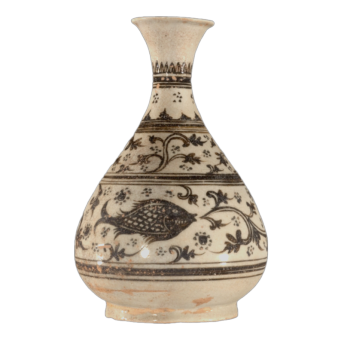
Caron bottle
Caron bottles were very popular in Ming Dynasty China, and during this period, Chinese ceramic craftsmanship was highly developed, producing many exquisite ceramic artworks. The design of Karon bottles usually features elegant contours and exquisite decorations. They may have intricate carvings or reliefs, as well as painted patterns, reflecting the artistic style and aesthetics of the time. These vases were usually used as decorations or for storing spices, powders, etc., so they played an important role in daily life during the Ming Dynasty. Caron bottles were very popular in Ming Dynasty China, and during this period, Chinese ceramic craftsmanship was highly developed, producing many exquisite ceramic artworks.

British Museum Collection of Ming Dynasty Dragon Peony Glaze
This set of 20 exquisite tiles, originally used in two buildings, is made of coarse pottery and decorated with Fa Hua, showing the excellent craftsmanship of the 15th to 16th sessions of the Ming Dynasty. Each tile vividly depicts the three-claw dragon playing between lotus and peony, showing the unique charm of traditional Chinese art. These tiles once formed a screen, with a total of 20 pieces in four rows, showing a very artistic sense and exquisite craftsmanship. This series of tiles is a treasure of Chinese architectural art, witnessing the glorious history of architectural decoration in the Ming Dynasty

British Museum Collection of Ming Dynasty Dragon Glaze
This series of Ming Dynasty architectural tiles is one of the cultural relics of the British Museum. This set of 20 exquisite tiles, originally used in two buildings, is made of coarse pottery and decorated with Fa Hua, showing the excellent craftsmanship of the 15th to 16th sessions of the Ming Dynasty. Each tile vividly depicts the three-claw dragon playing between lotus and peony, showing the unique charm of traditional Chinese art. These tiles once formed a screen, with a total of 20 pieces in four rows, showing a very artistic sense and exquisite craftsmanship. This series of tiles is a treasure of Chinese architectural art, witnessing the glorious history of architectural decoration in the Ming Dynasty.

Popular Models


Honey Badger (3D animated model)
194 View

Guinea fowl (3D animated model)
165 View

Wild Goose (3D animated model)
187 View

Red Fox (3D animated model)
155 View
Random Model


Taro
665 View

The allosaurus (3D animated model)
110 View

Shuleigelin frog female
811 View


Zenvo Aurora Tur Danish supercar
949 View


Anton Stoch
678 View

Fossil skull of a loving mother dragon
1052 View